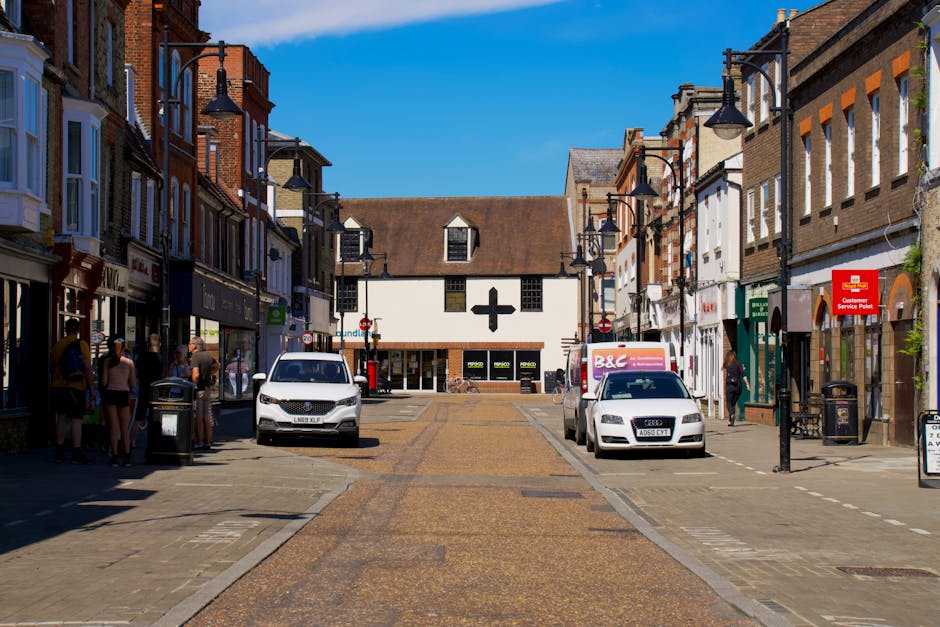
Sutton High Street removals guide for tight access moves
If you are planning a move on Sutton High Street, tight access can turn a simple removal into a very different day. Narrow pavements, awkward entrances, limited loading space, busy traffic, and flats above shops all change the rhythm of a move. This Sutton High Street removals guide for tight access moves brings the practical side into focus: what to check, how to prepare, and how to keep your move calm rather than chaotic. In our experience, the difference between a smooth day and a stressful one is usually made long before the van arrives.
Whether you are moving from a compact flat, a shopfront office, or a maisonette with a steep staircase, the challenge is not just carrying boxes. It is planning for access, protecting furniture, timing the load, and making sure everyone knows where they can park, turn, and pass. Let's face it, the street does not slow down just because you are moving.
Contents
- Why tight access planning matters on Sutton High Street
- How a tight access move works in practice
- Key benefits and practical advantages
- Who this is for and when it makes sense
- Step-by-step guidance
- Expert tips for better results
- Common mistakes to avoid
- Tools, resources and recommendations
- Law, compliance, standards and best practice
- Options, methods, and comparison table
- Case study or real-world example
- Practical checklist
- Conclusion
- Frequently asked questions
Why Sutton High Street removals guide for tight access moves Matters
Tight access is not a small inconvenience. It affects almost every part of the moving process: vehicle choice, loading time, crew size, packing method, and the order in which items leave the property. On Sutton High Street, you may also be dealing with pedestrian flow, limited stopping space, side roads that fill quickly, and buildings that were not designed with modern removals in mind.
That matters because a move that looks straightforward on paper can quickly become slower and more physically demanding than expected. A sofa that should be a two-person lift might need a careful pivot through a narrow landing. A wardrobe may need partial dismantling. A van may have to stop further away than planned. If that is not built into the schedule, things start to slip.
There is also a safety angle. Tight spaces increase the chance of bumps, scrapes, strained backs, and blocked access for neighbours or pedestrians. Good planning reduces all of that. It also helps keep your belongings protected, which is what most people really want at the end of the day.
Key takeaway: tight access moves are rarely about brute strength. They are about sequence, judgement, and knowing where the pinch points are before they become problems.
How Sutton High Street removals guide for tight access moves Works
A tight access move usually starts with an access assessment. That might be a quick call, photos, a video walkthrough, or an in-person visit depending on the scale of the job. The aim is simple: identify any obstacles before moving day. Think stair width, hallway turns, lift size, door frames, loading restrictions, and whether there is a clear route from the property to the vehicle.
Once the access is understood, the move is planned around the hardest items first. This sounds obvious, but many people do the opposite and leave bulky furniture until the end. In a tight property, that can be a mistake. If a bed base, wardrobe, or corner sofa needs dismantling, it is usually best to sort that before the van is already waiting outside.
The crew then decides on the best combination of equipment and vehicle. For some jobs, a smaller man and van style move is ideal. For others, you may need a larger vehicle such as a removal van or even a moving truck if the load is substantial and access still allows it. The right choice is not always the biggest vehicle. Sometimes the smartest option is the one that fits the street, not the one that fills it.
During the move, the team will usually work in stages: protect the floors, carry out the most awkward items, load in a logical order, and keep a clear line of movement. If parking is limited, they may need to use a shuttle-style approach, moving items from the property to the vehicle in smaller runs. It is not glamorous, but it works.
Key Benefits and Practical Advantages
There are real benefits to planning a tight access move properly, and they are not just about convenience.
- Less damage risk: careful route planning reduces the chance of scuffed walls, scratched doors, and split packaging.
- Faster loading: when the toughest items are handled first, the rest of the move tends to flow better.
- Better parking decisions: the team can choose the vehicle and stopping point that actually suits the street.
- Lower stress: you are not improvising in the middle of a busy pavement with neighbours wanting past.
- Improved safety: fewer awkward lifts and fewer rushed decisions mean less strain and fewer accidents.
There is also a practical commercial benefit if you are moving a small office, clinic, studio, or retail unit. A carefully staged move can reduce downtime. If your business depends on being back up quickly, that matters a lot. In those cases, services like office removals or broader commercial moves planning can be a better fit than trying to force a domestic-style approach onto a commercial space.
And for flats, the right preparation can make all the difference. If you are leaving an upper-floor apartment, a service such as flat removals is usually more useful than a generic approach because it recognises the realities of stairs, shared hallways, and awkward turns.
Who This Is For and When It Makes Sense
This guide is for anyone moving in or around Sutton High Street where access is likely to be tight, awkward, or time-sensitive. That could mean:
- people moving from upper-floor flats or maisonettes
- tenants in converted buildings with narrow staircases
- shop owners or offices with limited loading access
- students moving in and out of compact rooms
- households with large furniture and small entrances
- people needing help on a same-day schedule
It also makes sense if you are moving a few difficult items rather than a whole house. A heavy chest of drawers, a fridge-freezer, a piano, or a glass dining table can cause more planning headaches than a dozen boxes. That is where specialist handling matters. For example, a delicate instrument is best discussed through piano removals, while a few bulky household items may be better suited to furniture removals or even a simple furniture pick up.
If you are on a shorter budget or only have a handful of items, a smaller crew can be enough. A job like that often suits man with van or man with a van support, depending on how much lifting and dismantling is needed. Truth be told, not every move needs a full-scale operation.
Step-by-Step Guidance
Here is the clearest way to approach a tight access move on Sutton High Street.
- Measure the awkward bits. Check stair width, door openings, hallway bends, and lift size if there is one. If a large item needed a twist to come in, it will need the same twist to come out. Funny how that works.
- Look at the outside access. Is there a place to stop safely? Can a van load without blocking a busier section of road? Are there bollards, pavement width issues, or timed restrictions nearby?
- Sort the furniture list early. Decide what is going, what is staying, and what needs dismantling. Don't leave the tricky wardrobe until the morning of the move. That is where the mood starts to wobble.
- Use the right packing approach. Heavy books in small boxes, fragile pieces wrapped separately, and a sensible labelling system. Good packing matters more than people think. If you need help, look at packing and boxes or packing and unpacking services.
- Book timing carefully. If the road is busier at certain hours, try to avoid them. A calmer arrival can save a surprising amount of time.
- Prepare the route inside the property. Move loose items out of the way, keep pets secure, and clear anything that could trip the crew up.
- Load in a sensible order. Bulky items first, fragile items protected, and small boxes used to fill gaps rather than being crushed into bad spaces.
- Do a final check. Cupboards, lofts, under beds, behind doors, and sockets that may still be carrying chargers. It always seems to be the last drawer that hides the missing bit.
If your move involves storage in between properties, that should be planned at the same time as access. A short pause can make a tight move much easier to manage, especially if completion dates are not lining up neatly. In those cases, storage can take the pressure off.
Expert Tips for Better Results
These are the details that often separate an okay move from a good one.
- Photograph every access point. Doorways, stair turns, outside parking, and any narrow landing. Photos are useful because memory is not always kind on moving day.
- Protect the route, not just the item. A blanket on the sofa is good, but floor protection and corner guards may save more stress overall.
- Keep one box for essentials. Kettle, tea, charger, toilet roll, keys, paperwork. The boring stuff becomes very exciting very quickly after a move.
- Use colour labels. If the property is split across floors, this helps unloaders place boxes faster without guessing.
- Ask about dismantling in advance. Some furniture looks movable until you reach the staircase. Then it becomes a puzzle. A badly timed puzzle.
- Choose the smallest vehicle that still works. Bigger is not always better on a crowded high street. Sometimes smaller and more manoeuvrable wins.
One thing we often tell people: if you are unsure whether something will fit, assume it won't until you have measured it properly. That sounds cautious because it is. But cautious is usually cheaper than repairing a scraped banister.
Common Mistakes to Avoid
Tight access moves are often derailed by a few very ordinary mistakes.
- Underestimating parking distance. If the van cannot stop right outside, every extra metre matters.
- Not checking the staircase properly. A gentle-looking staircase can still be too narrow for a mattress or wardrobe.
- Packing boxes too heavy. Heavy boxes slow the move and increase injury risk. Keep them manageable.
- Forgetting building rules. Some flats or managed buildings have lift booking requirements or move-in time windows.
- Leaving dismantling too late. Once the crew is already carrying other items, the timing gets messy.
- Assuming a standard van will fit the job. Not every street setup suits every vehicle.
There is a subtle one too: people sometimes think a short move on a short street will be easy. In reality, short moves can be tricky because there is less room to recover from a mistake. No long drive to reset, no big buffer. Just action, fast.
Tools, Resources and Recommendations
You do not need specialist kit for every move, but a few practical tools can make tight access much easier:
- moving blankets and furniture covers
- strong tape and labelled markers
- small trolleys or sack trucks where suitable
- disassembly tools for beds, shelving, and flat-pack furniture
- floor protection for hallways and entry points
- straps for securing items during transit
From a service point of view, think in terms of the job rather than the label. If you are moving a single bulky piece, furniture removals may be enough. If you are moving a one-bedroom flat with lots of tight turns, a more complete home moves approach is likely more sensible. For a smaller or lighter move, removal services can cover the essentials without overcomplicating things.
If your move is time-sensitive, same-day support can be useful, but only if the access has been checked first. A rushed plan and tight access are not friends. If you are in that position, same day removals may help, though it is still worth being realistic about what can be done safely.
Law, Compliance, Standards and Best Practice
For a local removal on Sutton High Street, there is usually no single dramatic legal hurdle, but there are still important standards and duties to keep in mind. The main ones are practical: safe lifting, suitable vehicle use, considerate parking, and avoiding obstruction where possible. In the UK, moving work should follow sensible health and safety practice, and that means risk-aware planning rather than last-minute improvisation.
If you are hiring help, it is reasonable to ask how the move is handled safely, whether items are insured during transit, and what happens if access is worse than expected. A trustworthy provider should be able to explain its approach clearly. You should also read the insurance and safety information, as well as the health and safety policy, so you know what standards guide the work.
Best practice also includes keeping communication clear. If parking is tight, tell people exactly where the van can wait. If a building has a time slot, make that known early. If something is fragile or unusually heavy, say so. None of that is dramatic, but it prevents confusion. And honestly, that is half the battle.
For business moves, there may be extra considerations around opening hours, customer access, and data-sensitive items. That is where office relocation services can be especially helpful, because they are built around controlled movement rather than purely domestic shifting.
Options, Methods, and Comparison Table
Not every tight access move needs the same setup. Here is a simple comparison to help you think it through.
| Option | Best for | Pros | Watch out for |
|---|---|---|---|
| Man and van | Small flats, a few items, flexible moves | Manoeuvrable, simple, often well suited to narrow streets | May not suit larger loads or lots of heavy furniture |
| Removal van | Medium-sized house or flat moves | Good balance of space and access | Still needs adequate stopping space |
| Moving truck | Larger loads with enough road access | Higher capacity, fewer trips | May be harder to position on busy streets |
| Storage first | Delayed completions, downsizing, split moves | Reduces day-of pressure, helps with timing gaps | Requires extra planning and separate handling |
For many Sutton High Street jobs, the best answer is not the biggest vehicle but the most workable one. A smaller setup may actually save time because it can stop closer, turn more easily, and avoid the faff of trying to squeeze into a space that is clearly not having it.
Case Study or Real-World Example
Picture a third-floor flat above a shop on Sutton High Street. The hallway is narrow, the staircase turns sharply halfway up, and the only sensible stopping point for the van is a little further down the road. The move includes a sofa, a wardrobe, two beds, and a stack of boxes that are somehow heavier than they looked in the kitchen.
In that kind of situation, the move works best when it is split into stages. First, the access is checked and the sofa is measured against the stair turn. The wardrobe is dismantled before the van arrives. Boxes are grouped by room and kept manageable. A smaller van is used rather than forcing a larger vehicle into a tighter spot. The unload is then done in sequence, with heavier pieces placed first and the fragile items kept protected.
The result? Less backtracking, fewer awkward lifts, and no one standing on the pavement wondering if the chest of drawers will ever make the turn. It is not flashy. It is just effective. And on a busy high street, effective is exactly what you want.
We have seen versions of this with students, families, and small businesses. The details change, but the principle stays the same: good access planning makes the rest of the day feel much lighter.
Practical Checklist
Use this quick checklist before your move day.
- Confirm the exact address and access route.
- Measure stairs, doorways, lifts, and awkward corners.
- Check where a van can safely stop or load.
- Tell the team about any fragile, heavy, or oversized items.
- Decide which furniture needs dismantling.
- Pack heavy items into small boxes.
- Label boxes by room and priority.
- Protect floors, bannisters, and corners where needed.
- Set aside essentials for the first night.
- Read the move terms, payment details, and insurance information.
If you are booking a provider, it is also worth checking practical pages such as pricing and quotes and payment and security. Not the most exciting part, granted, but it helps avoid confusion later.
Conclusion
A Sutton High Street move with tight access is perfectly manageable when it is planned properly. The real job is not just moving items from A to B. It is anticipating the narrow spots, choosing the right vehicle, packing well, and keeping the route as clear and safe as possible. Once those pieces are in place, the rest feels a lot more under control.
If your move involves a flat, an office, a bulky item, or a stop-start schedule, take the time to plan it carefully. Ask for an access check, be honest about the awkward bits, and choose the level of help that matches the property rather than the ideal version of it. That way, you are not gambling on guesswork.
And if you are still at the stage of comparing options, that is fine too. A calm, measured move is usually better than a rushed one. One step at a time. That really is the trick.
Get a free quote today and see how much you can save.
Frequently Asked Questions
What is a tight access removal?
A tight access removal is a move where space is limited at the property, on the street, or both. That might mean narrow stairs, small doorways, limited parking, or awkward turns inside the building.
Is Sutton High Street difficult for removals?
It can be, depending on the exact property and time of day. Busy roads, mixed building types, and limited stopping space can all make planning more important than usual.
What vehicle is best for a tight access move?
That depends on the size of the load and how much room there is outside. In many cases, a smaller vehicle such as a removal van or man-and-van setup is easier to manage than a larger truck.
Should I dismantle furniture before the move?
If an item is bulky, heavy, or awkward to turn, yes, usually it is worth dismantling it in advance. Beds, wardrobes, and shelving are the most common examples.
How do I know if my sofa will fit through the stairs?
Measure the sofa at its widest points and compare that with the stair width, landing turns, and doorway openings. If in doubt, take photos and ask for a professional access check.
Can you do a same-day move on a tight access property?
Sometimes, yes, but only if the access is understood and the load is realistic. Same-day timing is tighter, so the move needs to be straightforward enough to handle safely.
What should I pack first for a small flat move?
Start with non-essentials: books, seasonal items, spare bedding, decorations, and duplicate kitchenware. Keep one bag or box aside for immediate essentials.
Are there extra risks with tight access moves?
Yes. The main risks are damage to walls or furniture, slower loading, awkward lifting, and possible parking complications. Good planning reduces all of these.
Do I need storage if my completion dates do not line up?
Storage can be very useful if there is a gap between leaving one property and entering the next. It helps avoid last-minute pressure and split scheduling.
What if I am moving office equipment from a cramped unit?
For business moves, it is usually best to plan around opening hours, access windows, and fragile equipment. Office-specific support is often the neatest solution, especially if downtime matters.
How early should I book a tight access removal?
The earlier the better, especially if the property has parking constraints or if you need dismantling, packing help, or specific timing. A little lead time makes planning much smoother.
Where can I find more information about your moving options?
You can look at the relevant service pages for the type of move you need, such as house removals, student removals, or removals depending on your situation.
What should I ask before booking a removal firm?
Ask how they handle access checks, whether they can deal with awkward furniture, what insurance is in place, and how pricing works if the move takes longer than expected.